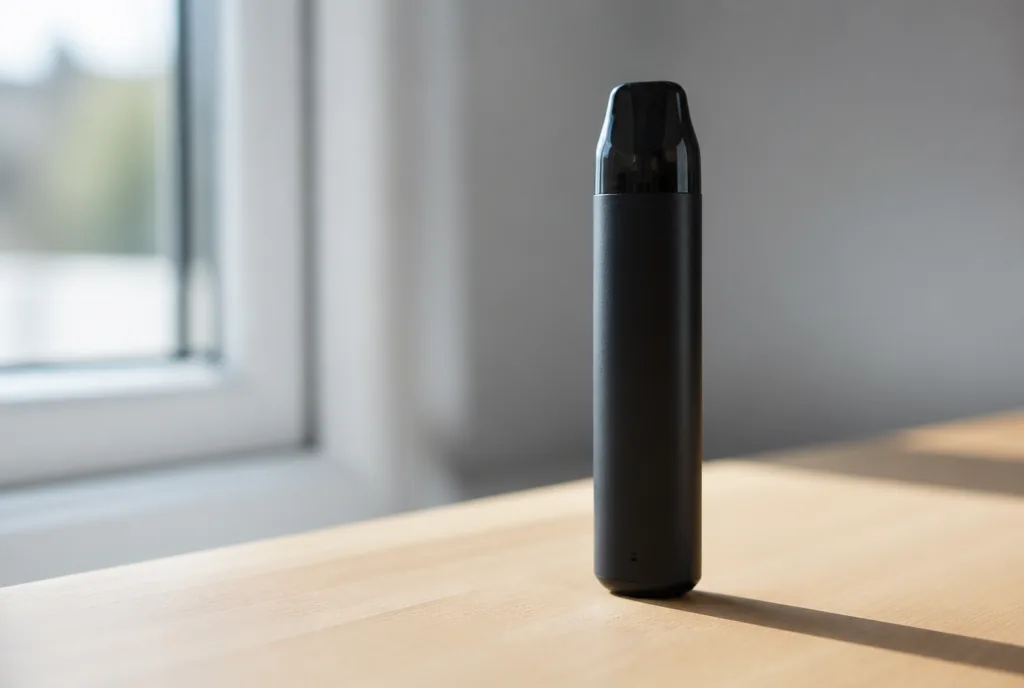
How much does a vape pod cost: the UK tiers
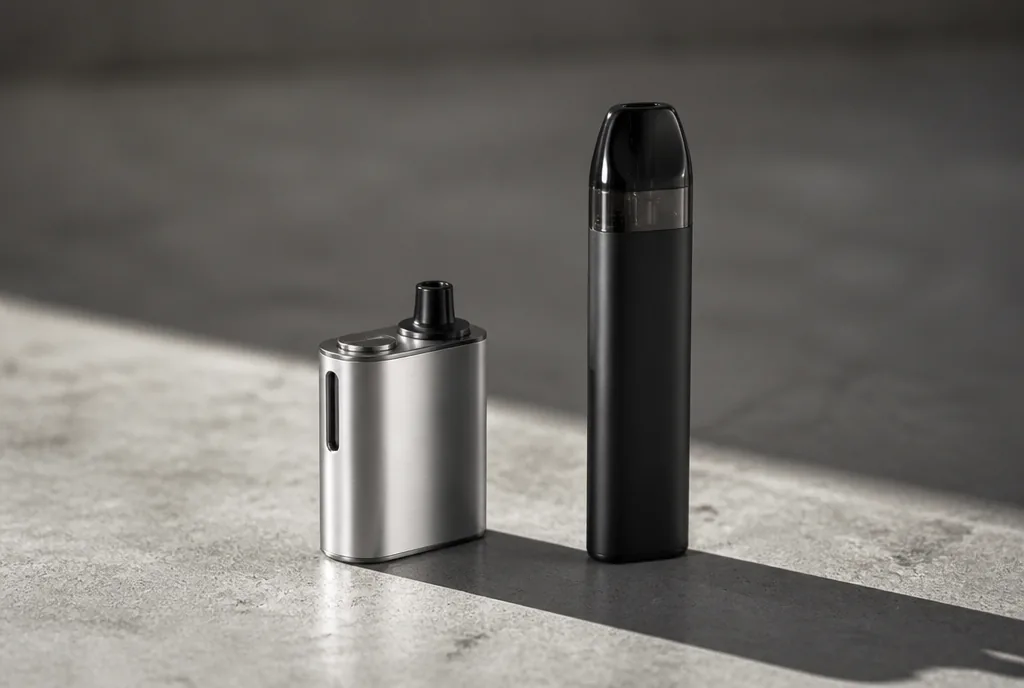
British listing pages put prefilled pod kits and full pod mods in the same grid, several times apart, with no explanation of what separates them. Working out how much does a vape pod cost therefore takes more than a glance at a sorted list. What matters is what each tier contains and, more to the point, what it commits you to for the following twelve months. A cheap pod can end the year above a dearer one.
How much does a vape pod cost: three tiers on British shelves
The catalogues of established UK retailers separate into three clear bands, and the boundaries are drawn by features rather than by finish.
The entry band covers simple refillable pods with a modest fixed battery and inhale activation. No power setting, often no screen, and a 2 ml pod as the law requires. This is where most first refillable devices come from.
The middle band adds a larger cell, adjustable airflow and frequently adjustable power with an indicator. It is bought for runtime far more often than for output.
The upper band is the pod mod: higher output, sometimes a removable 18650 or 21700 cell, a proper screen and a wider choice of pods. The jump in capability is real, and so is the jump in size.
What the tier actually buys
Moving up a band changes surprisingly little about the basic experience. Three measurable things change, and each has a direct effect on the budget.
Battery capacity is the characteristic that tracks the tier most closely. A larger cell spaces out charges, and since a cell is rated in charge cycles, charging twice a week rather than five times extends its usable life considerably.
Adjustability is the second. Airflow control and a power setting let one device cover a tight draw and a looser one, which matters if you intend to run more than one liquid on it.
The third is the pod type, and it is by far the heaviest financially while being the least advertised. Some pods take a replaceable coil. Others use a sealed cartridge whose coil cannot be removed, so the whole reservoir is discarded when the coil is finished.
The pod line that product pages never show
No retail listing puts this on the page, yet it overtakes the device itself within a few months for a regular user. The arithmetic is not complicated.
A sealed cartridge costs several times what a bare coil costs for the same period of service, because you are buying a reservoir, a mouthpiece and a coil each time rather than a coil alone.
At roughly one wear part per week, a device on sealed cartridges generates a monthly consumables line comparable to the purchase of the kit itself every couple of months. A device on replaceable coils does not.
Coil life is the variable underneath that, and it depends far more on the liquid than on the hardware. Heavily sweetened flavours shorten coil life sharply, and no device in this segment escapes it. Owners blaming the kit are usually looking at the wrong variable.
Our detailed look at the Wenax M2 running cost works through exactly this line on one specific kit.
How much does a vape pod cost across a year
Over twelve months the structure inverts against intuition. The purchase becomes the minor line and the consumables become the subject.
Three lines frame the total, and together they are the only honest answer to how much does a vape pod cost: the device, the annual cost of pods or coils, and the annual cost of liquid. The first is paid once and amortised. The second and third repeat every month without exception.
The question how much does a vape pod cost, asked across a year rather than at the till, produces a different answer entirely. The direct consequence is that an entry-band pod locked to an expensive proprietary cartridge can finish the year above an upper-band device that takes standard coils. That is the comparison retail grids never make, and it reverses the apparent ranking of models more often than any feature list does.
There is a second-order effect worth naming. A device whose pods are stocked by only one retailer carries a supply risk as well as a cost risk, because a discontinued cartridge turns working hardware into landfill.
Pod mods on removable cells
Above the middle band sit devices accepting a removable 18650 or 21700 cell, sold separately from the kit.
This architecture adds a line to the budget and removes another. The cell is replaced on its own when it tires, whereas a worn fixed battery condemns the entire device, screen and chipset included.
Over three years the trade tends to favour the removable cell for heavy use, and against it for anyone who wants to carry a device without thinking about it. A removable cell needs a hard case for transport, a suitable charger and an intact wrap, and those are conditions rather than preferences.
The choice depends on the cycle count the manufacturer publishes and on how often you charge, two values that have to come from the cell’s own datasheet rather than from a forum.
Why British pod ranges are moving right now
Any range observed today is unstable, and three mechanisms are moving it at once.
Generation turnover comes first. A successor arriving on British shelves pulls the previous model down while both stay listed, which is the single most reliable way the segment gets cheaper.
Regulation comes second and is specific to this market. Single-use vapes have been banned from sale across the UK since June 2025, which moved a large volume of buyers into refillable pods and reshaped what the entry band stocks.
Taxation comes third. A Vaping Products Duty applies from 1 October 2026, charged per millilitre of e-liquid regardless of nicotine content, with VAT applied on top. It lifts the liquid line of every budget while leaving the hardware line untouched, which makes the consumables half of this question even more decisive than it already was.
The wider indices section tracks how those bands shift over time, and our breakdown of the e-cigarette price applies the same three lines beyond the pod segment.
Frequently asked questions
Is a very cheap pod kit unreliable?
A low figure usually reflects a small battery and an absence of settings rather than poorer manufacturing. Many entry devices are trimmed versions of established ranges sharing the same pods.
How long does a pod device last before replacement?
The fixed battery is the limiting part. It is rated in charge cycles, typically several hundred, which works out at roughly one to three years depending on how often it is charged.
Are two entry kits better than one dearer kit?
Two devices let you run two liquids and cover a failure. The catch is that the consumables line doubles unless both models take the same pod, so check the reference before buying the second.
Do prefilled pod kits belong in these tiers?
They sit below the entry band at purchase, but their cost per millilitre is several times that of a refillable device using bottled liquid, so they invert the ranking over any real period.
Does a kit include everything needed to start?
A pod kit contains the device, one pod and a cable. Liquid is not included except in bundles sold explicitly as starter packs by some British retailers.
Placing a pod inside a real budget
Answering how much does a vape pod cost means reading two figures rather than one. The first is the device, which sets the tier and very little else. The second is the cost of its pod, which sets the following twelve months and is available on the consumables listing in three clicks before you buy anything. Checking that second figure as a matter of routine rearranges the ranking of models far more than any comparison of finishes, and it is the only part of the calculation that still holds once catalogues have turned over.
Editorial content for adult readers only. Vaping products contain nicotine, which is a highly addictive substance. Not for sale to under-18s in the United Kingdom. This article is not a buying recommendation.