Vaporesso Xros 5 Mini: the cost that comes after
A compact pod at the entry of the British market rarely looks like a decision worth analysing. Yet the Vaporesso Xros 5 Mini commits almost all of its spending after the purchase, in the pod rather than in the device. The kit is bought once and the pod comes back every week or so, and that second line is what decides the year. It is also entirely knowable before buying, which makes ignoring it a choice rather than an accident.
Vaporesso Xros 5 Mini: what British retailers actually sell
The Vaporesso Xros 5 Mini is stocked widely across established British retailers, and the version on sale here is not identical to the one described on international listings.
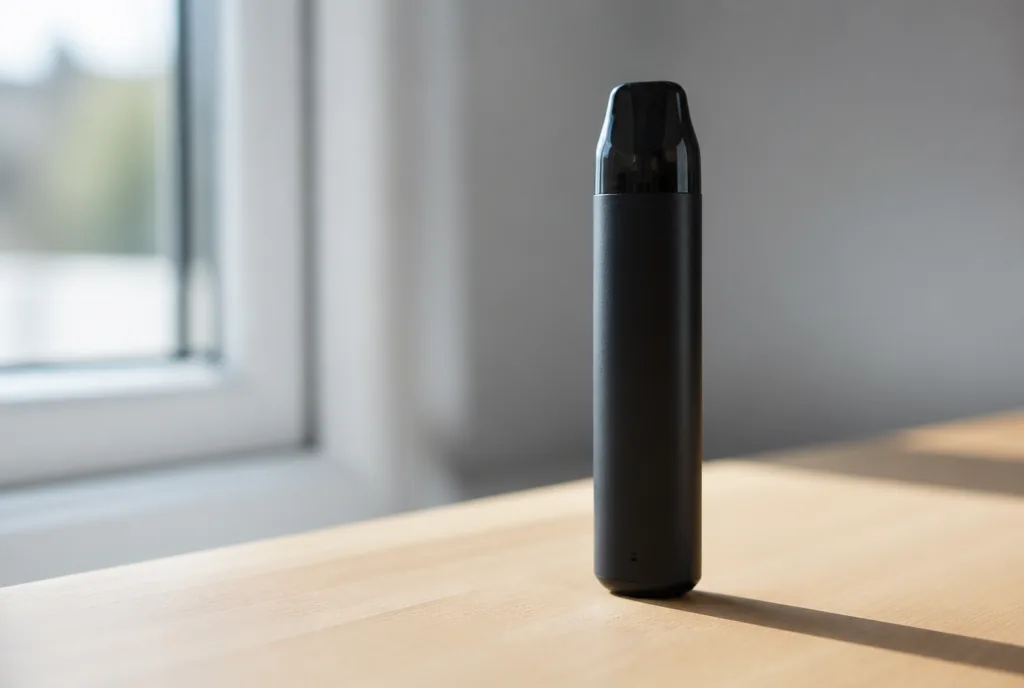
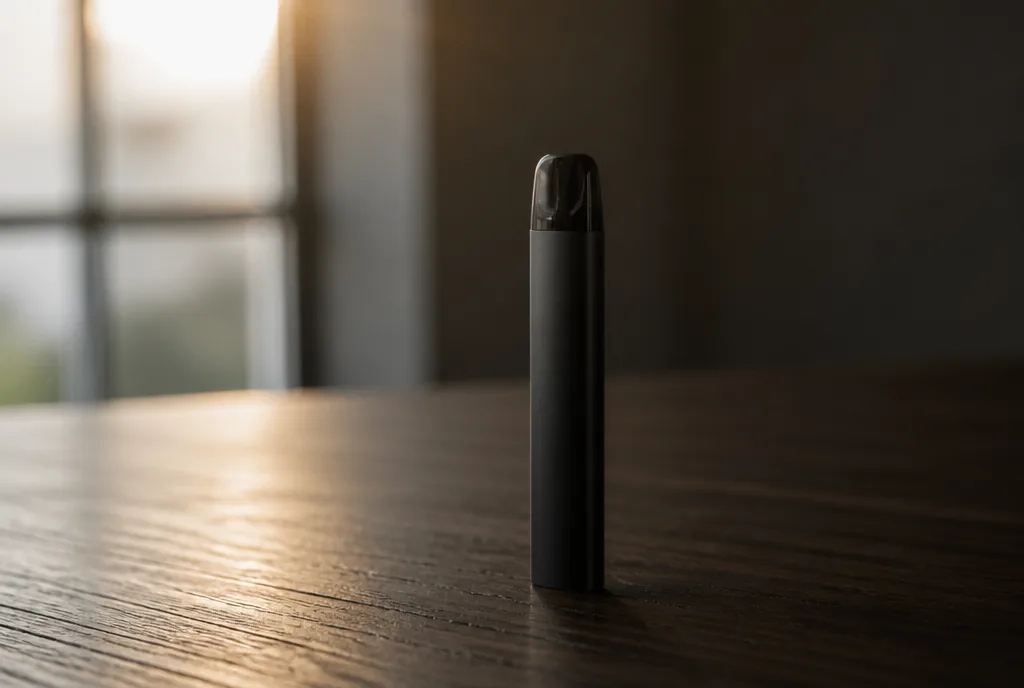
The device carries a 1500 mAh internal battery, an output stated by the manufacturer at up to 30 W, inhale activation with no fire button, adjustable airflow and an LED indicator for charge state. Charging is over USB-C at 2 A, with a full charge quoted in well under an hour.
The pod supplied with British kits is a Corex cartridge of 2 ml, the legal maximum for a refillable tank in the UK. Listings from other markets describe larger pods on the same device, and that difference is regulatory rather than a difference in the product line.
The same rule applies to what goes in it. Nicotine-containing e-liquid sold in Britain is capped at 20 mg/ml and at 10 ml per bottle, whatever device it is used in.
What the kit contains, and what each part costs later
The box is deliberately spare, and each element in it has a direct consequence for the recurring spend.
The battery is fixed and not user-replaceable. That means the life of the device is bounded by charge cycles, and when the cell tires the whole kit is replaced rather than repaired, unlike a mod running a removable cell.
The Corex pod holds the coil inside it and the coil cannot be taken out. When the coil is finished, the reservoir, the mouthpiece and the coil are all discarded together. This single design decision is what fixes the running cost of the Vaporesso Xros 5 Mini.
Activation is automatic, handled by the chipset with no power setting to adjust. That removes any possibility of a bad setting and equally removes any way to trim consumption through the device itself.
Airflow is the one adjustment available, and it is not cosmetic. Opening the control raises vapour volume per puff, which raises liquid consumption in direct proportion.
The pod, dominant line of the Vaporesso Xros 5 Mini
Two generations of Xros pods fit this kit, and the difference between them passes unnoticed on product pages while being the most effective lever on the budget.
The current Corex 3.0 pods and the previous Corex 2.0 pods are both listed by British retailers as compatible with the Xros series. The previous generation sits meaningfully below the current one per unit, as previous generations always do while both remain in stock.
Staying on the older reference therefore lowers the consumables line by a clear margin without changing hardware, changing habits or losing any function. Over a year of roughly weekly replacement, that margin is the difference between two devices that looked identical at purchase.
The second lever is coil life itself, and it depends on the liquid more than on the device. Heavily sweetened flavours shorten pod life sharply, and a pod that lasts a fortnight on a plain tobacco or menthol liquid may last a few days on a dessert flavour.
Anyone comparing the running cost of two pod kits without holding the liquid constant is measuring the liquid, not the hardware. Our breakdown of pod costs by tier sets out the same comparison across the segment.
Working out the monthly figure
The calculation runs to three lines and produces a number comparable with any other pod on the British market.
Line one is the pods: the number worn out in a month multiplied by their unit cost, taking the generation you actually buy rather than the one the kit shipped with.
Line two is the liquid: the 2 ml pod is refilled at every emptying, so counting fills over seven days gives a weekly volume directly, which is then multiplied by your real cost per millilitre. The method is set out in our guide to tracking refill costs.
Line three is the kit divided by its expected life in months. On a device of this tier used for two years, this line becomes almost negligible, which is the clearest demonstration that the purchase figure is not the subject.
What separates two owners of the same kit
Two people running the identical device can show monthly spending a long way apart. Four parameters account for most of the gap.
Real pod life leads. Vaporesso specifies a liquid base suited to the coil, and a thicker, more glycerine-heavy liquid saturates the wick and shortens the pod’s working life on this kind of low-power mesh coil.
The airflow setting comes second, for the reason given above. A wide-open draw on a device of this size consumes noticeably more liquid for the same number of puffs.
The third is the bottle format bought, since large formats sit lower per millilitre than single small bottles. The fourth is the retailer, since the same pod reference moves between British shops and delivery thresholds change the arithmetic on small orders.
Where the Xros 5 Mini sits in its own range
The model is easier to read against its siblings, several generations of which stay listed together on British shelves.
The full-size Xros 5 adds a screen and a larger cell in a bigger body. The Xros 6 Mini has already appeared in British catalogues, which by the usual mechanism pulls the 5 Mini down while both remain available.
That succession is the main reason this segment gets cheaper, and it is also why any list of figures for it expires within months. Reasoning in cost structure rather than in amounts is the only version of this analysis that survives.
One further point belongs to the British market specifically. A Vaping Products Duty applies from 1 October 2026, charged per millilitre of e-liquid regardless of nicotine content, with VAT on top. It raises the liquid line of this calculation and leaves the hardware line alone, which makes the pod and liquid halves even more decisive than they already were. Our trends coverage follows how the segment reacts.
Frequently asked questions
What coil is supplied with the UK kit?
British kits ship with a Corex pod rated at 0.8 ohm, suited to a mouth-to-lung draw. Compatible Xros pods exist at other resistances, which change the draw and the consumption.
How do I know a pod is finished?
Three signs arrive together: flavour falls away, the draw sounds bubbly, and a faint burnt note appears. The whole pod is then replaced, since the coil is not removable.
Should I wait after filling a new pod?
Yes. The manufacturer advises leaving a fresh pod to stand for several minutes before the first puff so the wick soaks. Skipping it damages the coil on first use and costs a pod.
Can it be charged from any charger?
The USB-C port accepts up to 2 A, and the internal circuit sets that limit. A more powerful charger will not charge it faster.
Why is the UK pod only 2 ml?
British rules cap a refillable tank at 2 ml. Larger capacities quoted on overseas listings for the same device relate to other markets and are not sold here.
What the Vaporesso Xros 5 Mini really costs
The purchase figure on a Vaporesso Xros 5 Mini represents a small fraction of what a year on this device involves. The decisive line is the pod, and the choice between the current and previous Corex generation is made freely because both fit the same kit. Add to that the liquid, whose weight rises with the October 2026 duty, and the picture is complete. Checking the cost of the consumable before the cost of the hardware remains the most profitable habit available for placing any compact pod inside a monthly budget.
Editorial content for adult readers only. Vaping products contain nicotine, which is a highly addictive substance. Not for sale to under-18s in the United Kingdom. This article is not a buying recommendation.